DONT SWIM Death Causes Guide
Every common fail state explained — so you stop blaming “bad luck” and start fixing the real cause.
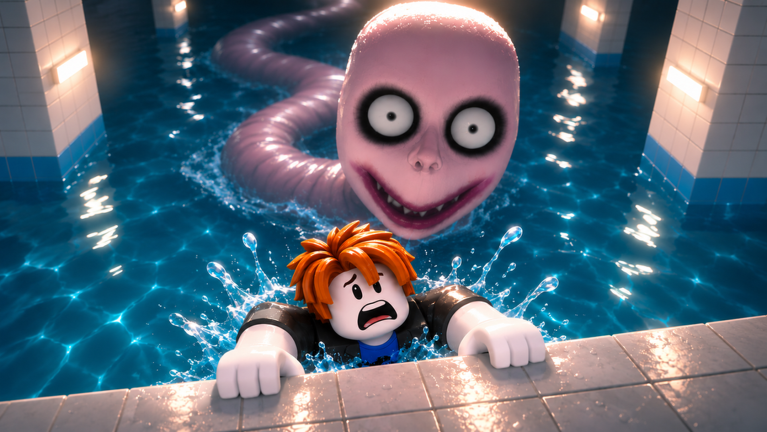
Why death causes matter more than raw retries
DONT SWIM ends runs for a short list of reasons. If you treat every wipe as the same “I died,” you will grind the same mistake for an hour. Label the fail, change one habit, then retry. This guide maps the deaths you will actually see in public lobbies: swim-state fails, Worm catches, squish crush, rising water, shove and bump deaths, and dark-room misjumps.
Pair it with Getting Started for the big loop, Controls for input hygiene, Tips for quick habits, Rooms for stage geometry, Survive the Worm for the finale, and the Players hub when collisions are the real killer.
Quick reference table
| Death type | What triggers it | First fix |
|---|---|---|
| Swim state | Avatar enters swimming | Centre-land, shorter hops |
| Worm catch | Grabbed after all levels | Pre-mark exits, keep paths dry |
| Squish crush | Closing walls / crush cycle | Watch a full open window |
| Rising water | Vertical safety disappears | Climb early, skip loot |
| Shove / bump | Teammate collision near water | Leave body-width gaps |
| Dark misjump | Jump into unseen gap or pool | Slow segments, silhouette holes |
Swim-state fail (the core rule)
Swimming is an instant fail. The game cares about swim state, not whether you “meant” to take a bath. Edge teeters, hip clips on rotating pads, and panic recovery hops all count.
Common setups:
- Landing on a lip and micro-sliding into water
- Diagonal hero jumps that look fine until depth judgment fails
- Celebrating a clear while walking backward along a pool border
- Trying to “save” a friend by diving after them
Counterplay: prefer centre mass on every pad, reset camera after near misses, and never invent a wet shortcut during a chase. Full movement notes live on Controls. If the same edge keeps eating you, open Tips and ban edge landings for one full run.
Worm catch (finale fail)
The Worm only appears after every level is cleared. Getting grabbed ends the run the same way swimming does. Many players clear the last stage, then stand still typing — that freeze is a free catch.
Common setups:
- Tunnel vision on the Worm while drifting into leftover pools
- Straight-line retreat into a wall with no backup exit
- Clumping with 20 players so one approach deletes half the lobby
- 180° panic turns that fling you off dry tiles
Counterplay: on the spawn cue, stop looting, locate the silhouette, break the approach line, and commit a primary dry route with a backup already chosen. Deep drills sit on Survive the Worm. Track whether a “Worm death” was actually a swim while fleeing — those need different practice.
Squish crush deaths
Squish and crushing walls close on a cycle. Red danger paints telegraph the kill zone. The crush itself can end you, or bounce you into water so the death log looks like a swim fail.
Common setups:
- Entering mid-close because chat distraction ate the window
- Standing in a doorway to “hold space” for friends
- Panic jumping when the wall paints red
- Contesting one safe pocket with three avatars
Counterplay: watch a full open → close → open loop before the first commit. Enter only on the open window, hug the safe colour, and exit before the next close. Assign a cycle caller in groups (Players). Room-specific notes belong with Rooms and the Level Walkthrough if you still need geometry.
Rising water deaths
Rising water steals vertical safety on a timer. You rarely “drown in place” because you chose to — you drown because loot, screenshots, or hesitation burned the climb window.
Common setups:
- Coin detours on mid platforms while the water line climbs
- Waiting for a perfect emote angle on a dying ledge
- Taking the scenic low route when a ladder exists
- Ignoring chat calls of “water rising”
Counterplay: prioritise upward routes first, skip optional coins until you are above the projected line, and pick paths with intermediate rests. Call the rise early so stragglers stop sightseeing. If you keep dying here, treat it as a speed-and-priority problem, not a jump-skill problem.
Shove and bump deaths
Up to 20 players share a session. Teammates are moving hazard geometry. A perfect squish window becomes lethal when three bodies contest one tile and someone gets hip-checked into the pool.
Common setups:
- Stacking on narrow lips during rotating pads
- Mid-air collisions that redirect landing vectors
- Revenge body-blocks after a near miss
- Photograph piles on the only dry corner
Counterplay: leave a body-width gap, stagger jumps by half a second, and soft-block with alternate routes instead of edge contests. Agree on “no intentional shoves near water” before Level 1. Solo queue survival tips and lobby etiquette live on Players.
Griefers exist. Do not chase them along pool borders — double fails are how tilt spreads. Hop servers if a lobby is unplayable; this wiki cannot moderate live sessions.
Dark-room misjumps
Limited lighting hides gaps and water channels. Sprint culture from other obbies fails here because contrast, not raw jump distance, is the scarce resource.
Common setups:
- Running toward a dim “floor” that is open pool
- Blind-following a teammate who also cannot see
- High camera angles that flatten depth cues
- Jumping the moment a silhouette appears without confirming a landing pad
Counterplay: zoom out slightly, lower the camera to silhouette holes against lighter tiles, and move in short segments. Stop whenever contrast disappears. Listen for footstep changes on hollow panels. Scout callouts help only when they are short — long chat essays mid-dark-room get people killed. Cross-check geometry on Rooms when a specific dark layout keeps wiping you.
Cascade deaths (how one fail becomes five)
A single swim or crush often triggers a lobby cascade: friends turn to look, someone shoves, another jumps early, and rising water finishes the stragglers. Break cascades by freezing your own camera for one breath before you move. Do not dive to “help.” Dry resets teach more than wet hero plays.
Practice loop that actually reduces deaths
- After each wipe, name the death type from the table above.
- Ban that death type for the next attempt (example: “no edge landings,” “no coin grabs during rises”).
- Change only one variable — camera, timing, route, or spacing.
- If Worm grabs keep winning, run dedicated finale drills from Survive the Worm.
- If collisions dominate, queue quieter lobbies or review Players spacing rules.
- Revisit Getting Started when you notice you forgot the two primary fail states entirely.
What is not a separate death type
Coins do not kill you. Cosmetics do not kill you. Missing a code does not kill you. Scripts that soft-lock physics can get accounts banned — that is a different kind of loss. Keep farming ambitions off the critical path until your dry clear rate is stable.
Related pages
- Getting Started — memorise the fail conditions
- Controls — stop accidental swim state
- Tips — short habit fixes between runs
- Rooms — stage layouts that cause repeats
- Survive the Worm — finale-only deaths
- Players — shove prevention and callouts
Name the death, fix the habit, stay dry. In DONT SWIM the water is patient — your retries do not have to be random.
Frequently Asked Questions
Quick answers for Poolrooms runs and Worm escapes.
What is the most common death in DONT SWIM?
Accidental swim state from edge landings, hip clips, and panic hops. Label it separately from Worm catches so you practice the right fix.
Does getting crushed by squish walls always count as a crush death?
Not always. Many crush cycles bounce you into water, so the visible fail looks like swimming even though the root cause was bad timing.
Can teammates kill me without griefing on purpose?
Yes. Mid-air bumps and contested safe tiles shove players into pools in full 20-player lobbies. Leave gaps and stagger jumps.
How do I tell a Worm death from a swim death during the finale?
If you entered swim state while kiting, log it as a swim fail. Only count a Worm catch when the grab ends the run on dry ground.
Why do dark rooms feel unfair?
Low contrast hides gaps. Slow down, lower the camera, and stop sprinting toward dim floors that may be open water.